Ready project or custom plan: which one fits you?
How to choose between a ready-made business project and a plan built for your idea.
Insights
More than 300 MW of new data center capacity is in the near-term Gulf pipeline, led by AI. Here is what is being built, where, and what it means for businesses in the UAE and Oman.
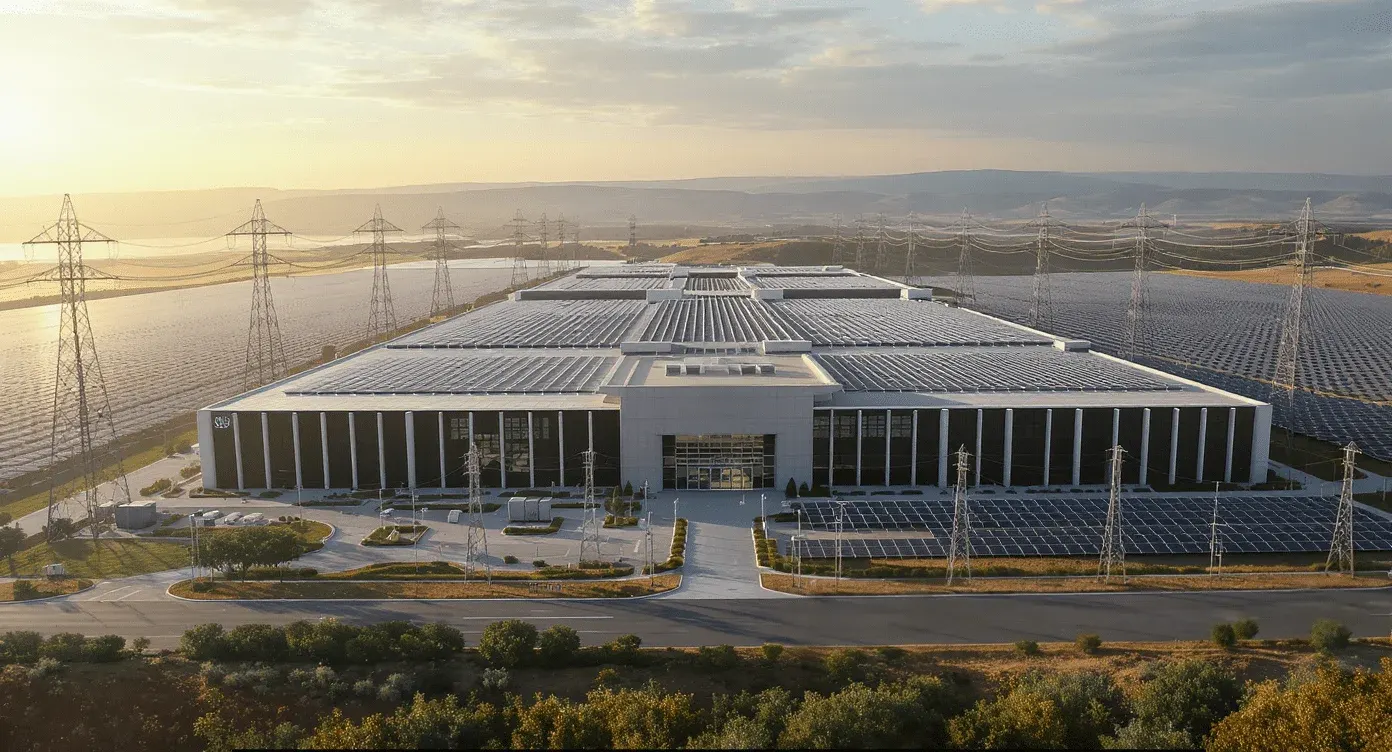
Most data centers in the Gulf were built in single-digit megawatts. The projects now under way are measured in tens and hundreds of megawatts, and the reason is artificial intelligence. Training and running AI models needs far more computing power, and far more electricity and cooling, than the cloud and enterprise hosting that filled earlier facilities.
At a recent industry briefing, the Gulf Data Centre Association (GDCA) set out the projects completed across the GCC in the past 12 months and those due in the next 6 to 12 months. We have put those figures together below, with some context on each market and a practical view on what this build-out means for investors, contractors and service businesses.
A traditional enterprise data center rack draws somewhere in the region of 5 to 10 kW. A rack of modern AI servers can draw several times that, and the newest GPU platforms are designed for direct liquid cooling because air alone cannot remove the heat. This has three direct effects on how facilities are planned:
For the Gulf, the advantages are clear: available land, strong state backing, competitive energy, and a growing network of subsea cables. The constraint is the same as everywhere else: delivering power, cooling and skilled people on time.
These are the projects the GDCA highlighted as completed or reaching operation over the past year.
| Country | Project | Capacity | Operator |
|---|---|---|---|
| Bahrain | First 3 data halls (pods) operational at the new Center3 facility | 3 x 1.2 MW (3.6 MW) | stc / Center3 |
| Saudi Arabia | DDC306 facility, Eastern Province (completion July 2026) | 11.85 MW | stc / Center3 |
| Qatar | M Vaults 5 expansion, delivered ahead of schedule in June 2026 | 4 MW | Meeza |
| Oman | Salalah data center with subsea cable landing station | 125 racks | Ooredoo |
| Oman | Farq data center, plus second phase of the KOM 4 facility | 4.4 MW | Otech |
| Kuwait | None listed |
The completed list is modest in size. Most of these are colocation and telecom facilities, not AI-specific builds. The step change is in what comes next.
| Country | Project | First phase | Planned total | Target date |
|---|---|---|---|---|
| UAE | Stargate UAE, Abu Dhabi (Khazna) | 200 MW | 1 GW cluster | Q4 2026 |
| UAE | Gulf Data Hub, KIZAD | 22 MW | Dec 2026 or Jan 2027 | |
| UAE | Gulf Data Hub, Phase 6 | 16 MW | 2027 | |
| Saudi Arabia | DataVolt, Riyadh | 16 MW | Q4 2026 | |
| Saudi Arabia | Ezditek, Riyadh | 6 MW | 24 MW (rest in 2027) | Q4 2026 |
| Saudi Arabia | ICS Arabia AI facility, Riyadh | 6 MW | Plus 48 MW at a second Riyadh site | Mid to late 2027 |
| Oman | Otech AI campus, Salalah | 50 MW | 175 MW | November 2027 |
| Kuwait | Gulf Data Hub, Kuwait City | 3 x 2 MW | February 2027 |
Near-term pipeline by country (MW, listed projects)
The UAE figure is dominated by one project, but the pattern in Saudi Arabia is just as telling: several mid-sized operators building in Riyadh at the same time, each with a second phase already planned.
The headline numbers only show the first step. Every major project on the list has a much larger plan behind it.
First phase as a share of the planned total
First phaseRemaining planned capacity
For anyone supplying these projects, this matters more than the first-phase figure. A contractor or service provider that performs well on phase one is in the best position for the phases that follow, often on the same site and with the same client.
Stargate UAE is the project that changed the scale of the regional conversation. It is a 1 GW AI cluster inside a wider 5 GW UAE and US AI campus in Abu Dhabi, developed by Khazna Data Centers, a G42 company, with OpenAI, Oracle, NVIDIA, Cisco and SoftBank as partners. G42 has said the first 200 MW is expected to be complete in 2026, with civil, structural and MEP works already underway and long-lead equipment on site.
Alongside it, Gulf Data Hub continues to add capacity in Abu Dhabi, including 22 MW in KIZAD and a further 16 MW phase due in 2027. For UAE businesses, the result is a concentration of construction, fit-out, operations and support work in and around Abu Dhabi over the next three to five years.
The Saudi pipeline is broader. Instead of one very large campus, several operators (DataVolt, Ezditek, ICS Arabia and stc’s Center3) are delivering facilities between 6 and 16 MW, mostly in Riyadh, with larger phases planned for 2027. This spreads the opportunity across more clients and more sites, and suits suppliers that can work with several operators in parallel.
Oman is the market to watch, and Salalah is the reason. The city sits close to several major subsea cable routes between Asia, Africa and Europe, and it now has a data center combined with a cable landing station: Ooredoo’s facility, which opened with 125 racks and is planned to grow to 500. Otech’s planned AI campus in Salalah takes this much further, with a 50 MW first phase expected in November 2027 and 175 MW in total.
The current spread of facilities across Oman is wider than many people expect.
| Location | Status | Why it matters |
|---|---|---|
| Muscat | Several existing facilities, one more under construction nearby | Main enterprise and government demand |
| Sohar | Existing facility | Industrial port and free zone, close to the UAE border |
| Nizwa | Existing facilities | Inland location, useful for backup and disaster recovery |
| Duqm | Existing facility | Special economic zone and port, room for large future sites |
| Salalah | Existing facilities, new AI campus planned | Subsea cable landings, link between the Gulf, Africa and Asia |
Oman’s main draws are land, a stable regulatory environment and connectivity. The questions an investor needs answered are power availability at each site, the timeline for grid upgrades, and the depth of the local skilled workforce.
These markets are smaller but active. Meeza in Qatar delivered its 4 MW M Vaults 5 expansion ahead of schedule. Gulf Data Hub is bringing three 2 MW facilities online in Kuwait City in early 2027. In Bahrain, stc and Center3 have started operating the first three 1.2 MW pods at their new facility. Each of these supports national cloud, government and data residency demand.
Analysys Mason projects USD 5 to 7 billion of AI data center investment in the GCC in 2026, and publicly announced plans add up to more than USD 30 billion through 2030. Microsoft alone has announced USD 7.9 billion of AI and cloud expansion in the UAE over 2026 to 2029.
Two cautions apply. First, target dates for large projects move, often because of power connections or the delivery of long-lead equipment such as transformers, switchgear and chillers. Second, announced capacity is not the same as capacity in operation. Any business plan built around this market should use realistic dates and test what happens if a project slips by six to twelve months.
Most businesses will not build a data center. Many more can sell to one. Each facility needs a long chain of contractors, suppliers and service providers, during construction and for the 15 to 20 years it operates.
| Opportunity | Examples | What buyers look for |
|---|---|---|
| Construction and MEP | Civil works, electrical and mechanical installation, modular building, commissioning | Track record on mission-critical sites, safety record, ability to staff fast |
| Power and cooling services | UPS, generator and chiller maintenance, liquid cooling support, fuel supply | Response times, certified technicians, spare parts held locally |
| Security and ELV | Perimeter protection, access control, CCTV, intrusion detection, structured cabling | Compliance with operator and national security standards, layered design, audit trails |
| Facilities management | Critical facilities operation, cleaning, pest control, landscaping | Data center experience, documented procedures, 24/7 coverage |
| Skills and staffing | Technician training, recruitment, outsourced operations teams | Certified people, national workforce targets, retention |
| Campus support | Transport, catering, accommodation for remote sites such as Duqm or Salalah | Reliability, cost, scale for construction peaks |
| AI and cloud services | Local hosting, data residency, AI tools for SMEs and government | Compliance with local data rules, local support, pricing |
In our experience, the businesses that win in this market have three things in common. They specialise instead of trying to cover everything. They invest early in the certifications and procedures that operators ask for. And they plan for long sales cycles, because data center operators qualify suppliers carefully and rarely change them once they are in.
If you are thinking of entering this market, or expanding an existing business into it, these are the questions a feasibility study should answer:
Our team combines business advisory with hands-on ICT and AI expertise, so we can review both the commercial case and the technical assumptions behind it. We prepare feasibility studies and business plans for companies that want to supply the data center sector, and for investors looking at related opportunities in the UAE and Oman. You can read more about our work with technology and AI businesses.
If you are weighing up an opportunity in this market, book a free 15-minute consultation and tell us what you have in mind.
Figures for completed and upcoming projects are from a Gulf Data Centre Association industry briefing in October 2026. Target dates are those given by operators at the time and may change. Investment figures are from Analysys Mason’s 2026 predictions. Stargate UAE details are as reported by Gulf News from G42.
Free 15-minute call
Talk to an advisor about the opportunity, the evidence you would need and whether it is worth pursuing.
Insights
How to choose between a ready-made business project and a plan built for your idea.
The five parts of a sound feasibility study, the questions each part answers, and how to tell a useful study from a weak one.